

CHD RESOURCES
My CHD Sidekick.
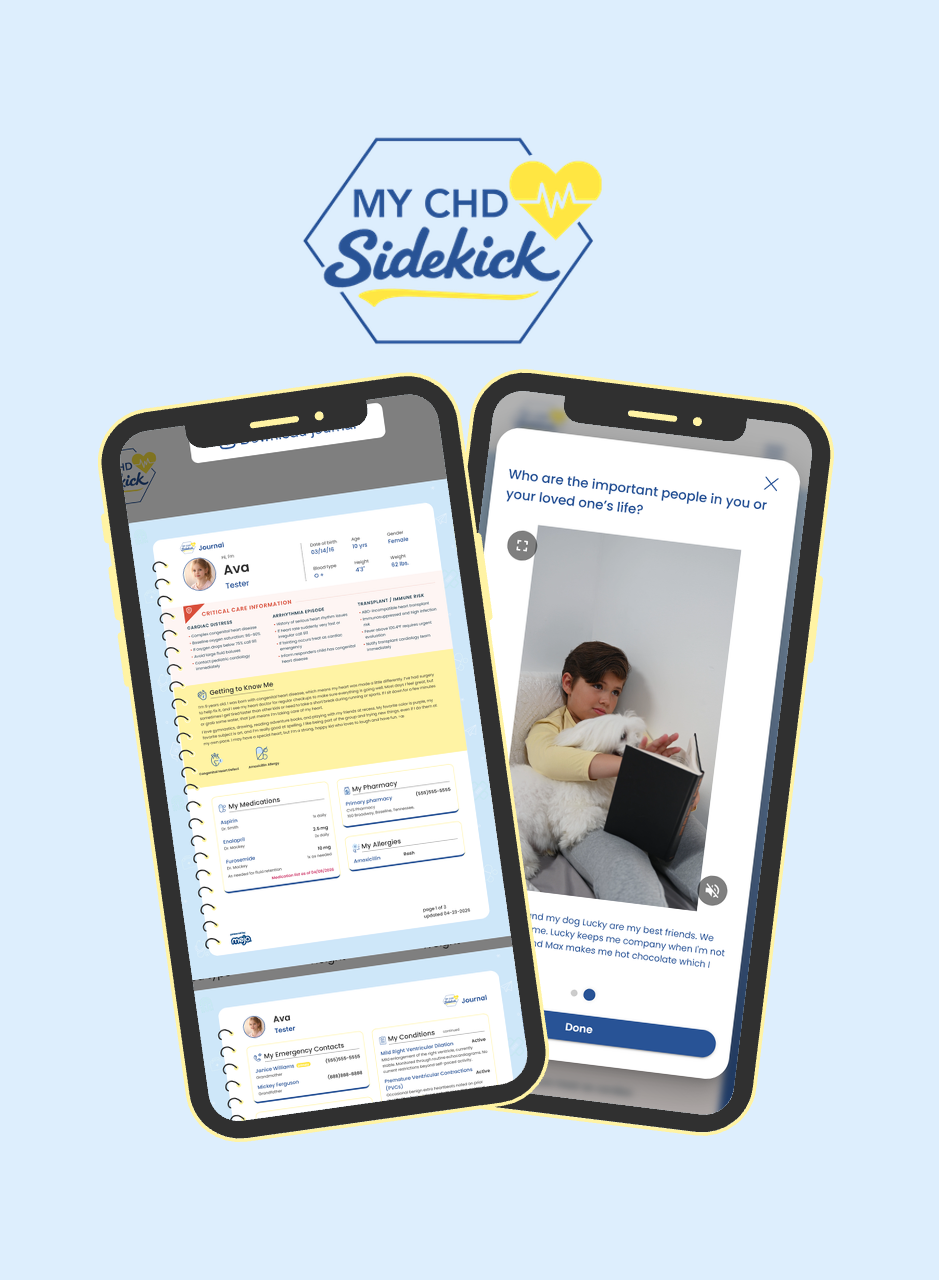
My CHD Sidekick is a digital care journal app specifically built for CHD families. It provides one secure place to organize, track, and share everything related to your child’s care.
My CHD Sidekick is completely free for CHD families, made possible by The Brett Boyer Foundation. Our community has enough to manage. Let us take one thing off your plate.
Learn more about My CHD Sidekick below or sign up now!
WHAT IS MY CHD SIDEKICK?
Everything in one place.
Right when you need it.
CHD families carry a heavy load, and not just medically. Notes, documents, appointment histories, medication lists, specialist contacts. It adds up fast. My CHD Sidekick was built to make that part easier.
My CHD Sidekick is a digital care journal designed specifically for patients and families navigating congenital heart disease. Instead of piecing information together from memory, scattered notes, and stacks of paperwork, you can keep everything in one secure, easy-to-access place.
Whether you're heading into an appointment, introducing your child to a new provider, preparing for school or travel, or just trying to stay on top of day-to-day care, My CHD Sidekick is ready when you are.
You don't need to do everything at once. Start with one thing: a medication, a document, a contact. That's enough to begin. It gets more useful over time, not more overwhelming.
What families can store:
Medications, conditions & allergies
Care team contacts
Important documents
Health tracking information
Visual narratives using photos and videos
Notes and care details you don’t want to forget

HOW IT HELPS
Built around what families actually need.
My CHD Sidekick is useful in real life, not just in a medical setting. It works across the full circle of care and support.
📋
ONE PLACE FOR EVERYTHING
Care involves dozens of moving pieces: documents, conversations, appointments, medications, history. My CHD Sidekick brings them together so nothing gets lost.
✓
ALWAYS PREPARED
The right information at the right moment changes outcomes. Walk into every appointment and every conversation with what you need. No more starting from scratch.
🌱
START SMALL, BUILD OVER TIME
One entry, one document, one moment. That's enough to begin. My CHD Sidekick becomes more valuable the more you use it, but it's useful from day one.
SHARE ON YOUR TERMS
You decide who sees what and when. Share full medical detail with a cardiologist, a shorter summary with a school team, or only selected information with a caregiver. My CHD Sidekick makes all of that possible without starting over each time.
Recipients don't need an account. Send a secure link by email or text and they can access it with your child's birthday.
Share with anyone in your circle of care:
Cardiologists & care teams
School staff & teachers
Therapists & specialists
Respite caregivers
Family members & friends
Community support providers

COMMON QUESTIONS
FAQ.
-
No. My CHD Sidekick is accessible from any device using a web browser and visiting https://mychdsidekick.mymejo.com. That way you can use it on a computer as well. Once you login on your phone, you’ll be shown how to add My CHD Sidekick to your phone’s home screen just like an app.
-
Patients and families stay in control. You decide who to share with and what to share. That might include:
Clinicians and care teams
School staff
Therapists
Community support professionals
Family members and friends
Anyone else involved in care
My CHD Sidekick is meant to help families share information intentionally, not broadly.
-
No. My CHD Sidekick is provided completely free to CHD families by The Brett Boyer Foundation.
-
My CHD Sidekick is hosted on a leading cloud platform with your information encrypted both in transit and at rest. You are always in control of what you share and with whom. If you choose to download information to your personal device, please note it will not be encrypted. You can review the Terms of Use and Privacy Policy for full details.
-
No account needed. Send a secure link by email or text to anyone: a new provider, a school contact, a caregiver. They just need your loved one's birthday to view what you've shared.
-
Yes. You choose what to include each time you share. Send full medical detail to a cardiologist, a shorter summary to a school team, or only selected information to a caregiver. You're never locked into sending everything at once, and you decide for how long they can access that information.
-
Families often get the most immediate value from entering medications, conditions, emergency contacts, primary care provider info, and allergies first. From there, you can keep building over time. My CHD Sidekick doesn't have to be complete to be useful.
-
A visual narrative uses photos or short videos to help others understand the whole person, not just the diagnosis. It can capture what matters to your child, what helps them feel comfortable, and important routines and preferences. This is especially helpful when introducing your child to a new clinician, school staff member, or caregiver for the first time.